

Reviewed by Dr. Sogole Moin, Board-Certified Orthodontist.
Modern orthodontics offers more options than ever before, allowing patients to choose the treatment that fits their lifestyle, esthetics, and orthodontic goals. At Moin Orthodontics, Dr. Moin provides a full range of braces and clear aligner solutions to help children, teens, and adults achieve a healthier, more confident smile. Whether you prefer a traditional approach or something more discreet, we will help you determine the option that works best for your needs.
What Orthodontic Options Do We Offer?
We offer several advanced teeth-straightening choices designed to deliver predictable, efficient results. Each option provides its own advantages, and Dr. Moin will guide you in selecting the one that best supports your smile goals.
Metal Braces
Traditional metal braces are the most common type of braces used today. They are smaller and more comfortable than ever before and constructed of high-grade space age metal alloys. With metal braces, you have the option of adding colored elastics (rubber bands) for a more unique and colorful smile.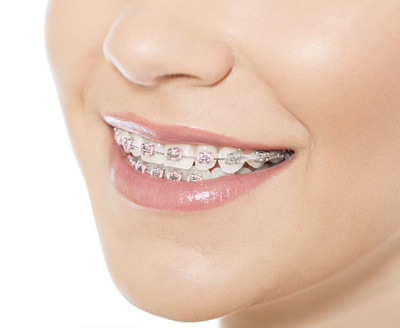
Ceramic Braces
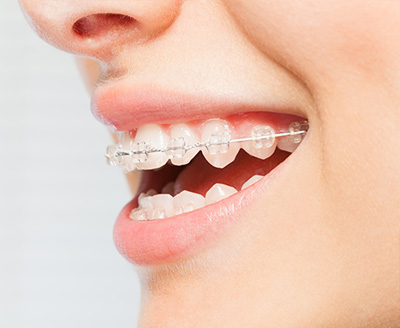
Ceramic braces are made of clear materials and therefore less visible on your teeth than metal braces. For this reason, ceramic braces are used mainly on teenage and adult patients who have aesthetic concerns. They are more fragile due to their ceramic nature and require extra attention.
Invisalign Aligners
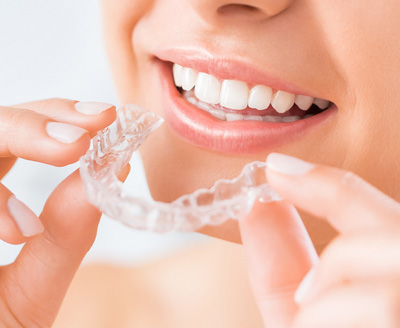
Clear aligners, such as Invisalign, use a series of invisible, and removable aligners to straighten your teeth. Since they are removable so you are not limited in what you can eat and drink during treatment. Plus, brushing and flossing are less of a hassle. There are fewer unexpected appointments with aligners.
Invisalign vs Braces: Which Is Right for You?
Both Invisalign and braces straighten teeth effectively, but each offers unique advantages.
Braces
- Always working because they stay on the teeth
- Effective for mild to complex orthodontic cases
- Available in metal or more discreet ceramic materials
- Require careful brushing and dietary adjustments
Invisalign
- Nearly invisible, removable aligners
- No food restrictions and easy brushing and flossing
- Fewer emergency visits since no wires or brackets
- Best for patients who can wear aligners as instructed
Dr. Moin will compare both options during your consultation and recommend the treatment that best matches your orthodontic needs and lifestyle.
What Are the Best Orthodontic Options for Each Age Group?
Different ages often benefit from different types of treatment. Dr. Moin will help determine the most effective approach based on growth, lifestyle, and goals.
Children (Ages 7–11)
Early treatment focuses on guiding jaw growth and creating space for permanent teeth. Metal braces or limited appliances are commonly used to simplify future treatment and prevent more complex issues.
Teens (Ages 12–17)
Most permanent teeth are in, making this the ideal time for full orthodontic treatment. Teens often do well with metal braces, ceramic braces, or Invisalign, depending on esthetics and responsibility level.
Adults
Adults appreciate discreet and efficient options. Ceramic braces and Invisalign are especially popular for their subtle appearance, while metal braces work best for more complex alignment needs.
Frequently Asked Questions
Have questions about choosing the right type of braces? Here are some of the most common things patients ask before starting treatment.
Which Type of Braces Works the Fastest?
Treatment time depends on your individual needs, not just the appliance. Metal braces often work slightly faster for complex cases, while Invisalign and ceramic braces can be just as effective for mild to moderate alignment needs.
Are Ceramic Braces More Delicate Than Metal Braces?
Yes. Ceramic brackets are designed for esthetics, so they require a bit more care. They work just as effectively as metal braces but may not be recommended for patients who play contact sports or need a very durable option.
Can Invisalign Treat All Orthodontic Problems?
Invisalign can correct many alignment issues, including crowding, spacing, and mild bite concerns. Some complex cases may still be better suited for braces. Dr. Moin will help determine which treatment offers the best results for your specific needs.
Do Braces or Aligners Hurt More?
Both braces and Invisalign can cause mild soreness when treatment begins or adjustments are made. This is temporary and a sign that your teeth are moving. Most patients describe the discomfort as manageable and short-lived.
How Do I Know Which Treatment Option Is Best for Me?
Your consultation is designed to help you make that choice. Dr. Moin will evaluate your teeth, bite, lifestyle, and esthetic preferences to recommend the treatment that aligns with your goals and provides the most efficient, predictable results.